NEWS CENTER
Capture the latest industry trends and stay informed about the latest technological developments
|
|
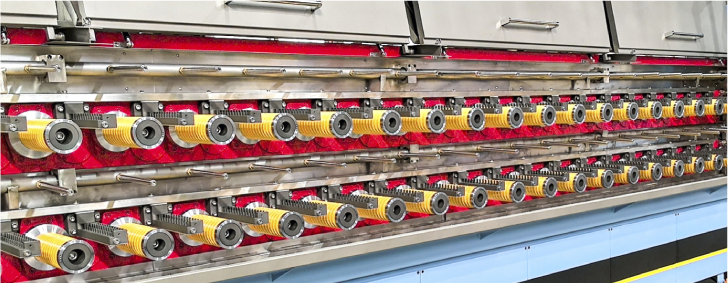
Wire Drawing Machine Manufacturer: What Are the Common Types of Wire Drawing MachinesA wire drawing machine is a key piece of equipment in metal wire processing, and it belongs to an impact load. Its consumption quality and efficiency are crucial for enterprises. Wire drawing machines can be divided into three types: pulley type, loop type, and straight-line type. With the development of consumption technology, variable frequency technology and PLC control methods in electrical control have gradually replaced DC motors and torque motors, establishing a dominant position. The wire drawing machine has requirements for frequency conversion. When the frequency converter is at 0.5Hz, it can achieve a starting torque of up to 150%, enabling proportional control of multiple units. When the load and voltage change, it can actively adjust the output frequency to maintain a constant speed. It should have RS485 communication function to communicate with PLC and PC, and adopt a common DC bus control method, with good energy-saving results.
The defects of traditional V/f control or space vector control frequency converters: Traditional V/f frequency converters have insufficient low-frequency torque. When the load and voltage change, the speed will be unstable, so high-precision proportional control cannot be achieved. Only sensorless vector control can basically control the slip of the motor shaft. During the operation of the wire drawing machine, there are often occurrences of the motor shaft having the characteristics of a generator load. When the load is electric, the slip of the motor is positive and changes with the load; conversely, when the load has the characteristics of a generator, the slip of the motor is negative, easily exceeding the synchronous speed, and its negative value is proportional to the magnitude of the power generation characteristic, so high-precision proportional control cannot be achieved. |