Wire drawing machines are mainly applied in the processing of metal wire and cable materials such as copper wires and stainless steel wires, and are extremely important processing equipment in the metal wire and cable manufacturing industry.
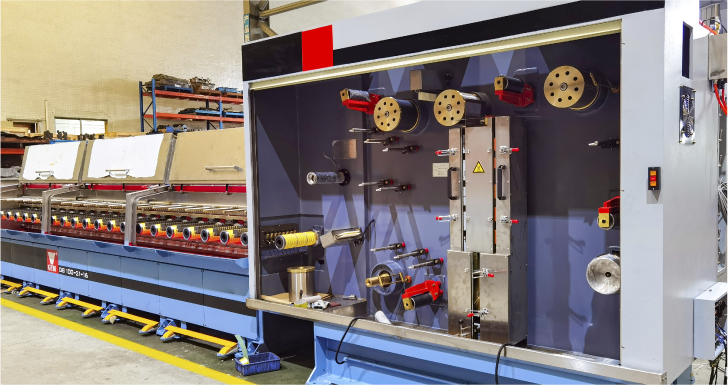
With the continuous development of variable frequency speed regulation technology, variable frequency speed regulators have been widely applied in the wire drawing machine industry, undertaking links such as wire drawing speed regulation, tension winding, and multi-stage synchronous control. The application of frequency converters has greatly improved the automation level and processing capacity of wire drawing machines, reduced production costs, and has been widely recognized by the industry.
A wire drawing machine generally has three technological processes:
Pay-off: The pay-off of metal wires, for the entire wire drawing machine link, does not require extremely high precision in its control. For most wire drawing machines, the pay-off operation is achieved by the frequency converter driving the pay-off rack. However, there are also some wire drawing machines with dual-frequency control, and even directly send the wire drawing machine through the wire tension stretching in the wire drawing link to achieve free pay-off.
Wire drawing: The wire drawing link is the most important working link of the wire drawing machine. For different metal materials, different material varieties and requirements, the wire drawing link is very different.
Take-up: The working speed of the take-up link determines the production efficiency of the entire wire drawing machine, and it is also the most difficult part to control in the entire system. In the take-up part, commonly used control technologies include synchronous control and tension control to realize the take-up of metal products.